
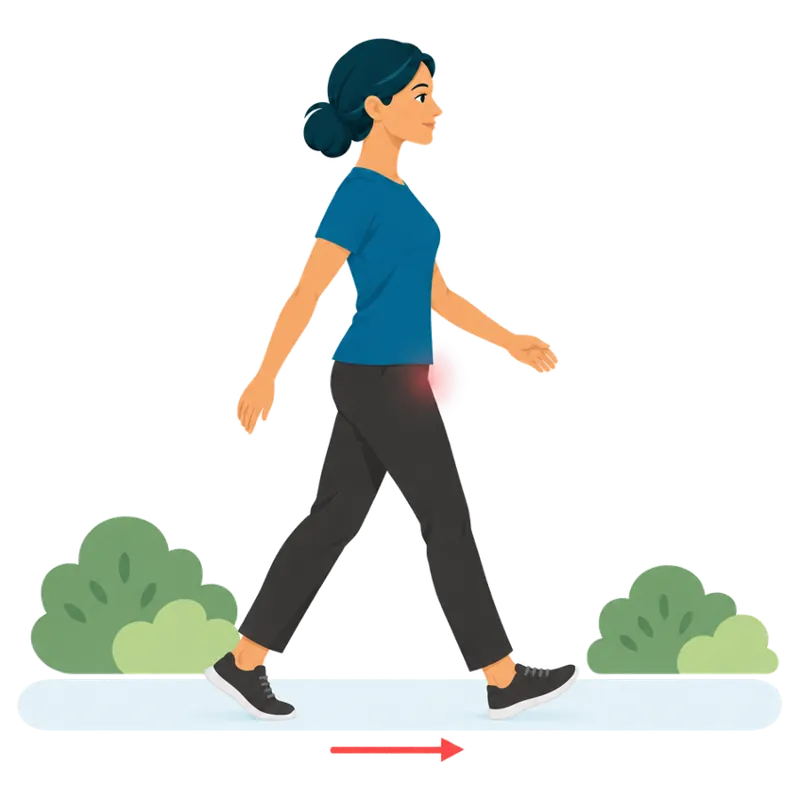
About this injury
In a collision, the knees can hit the dashboard and push force up into the hips, or the body can twist against the seat. This can strain the muscles and tissues around the hip or, less often, cause more serious injuries.
Hip injuries often affect walking, sitting and getting up from a chair. An assessment helps identify the type of injury and what recovery may look like.
Common symptoms people notice
- Pain in the hip, groin or outer thigh
- Stiffness, especially after sitting
- Discomfort when walking or climbing stairs
- Trouble getting in and out of a car
What care may include
Care starts with a comprehensive assessment by a physiotherapist, chiropractor, nurse practitioner or physician. For a hip injury, this includes checking areas of tenderness and pain, how well the hip moves, the strength of the muscles around the hip, and how walking is affected.
Under Care-First, care follows a customized treatment plan built around the specific injury. Depending on the injury, care may focus on restoring comfortable movement and strength around the hip, and getting back to walking and daily activities. The clinician decides what is appropriate, how often, and when to adjust it as recovery progresses.
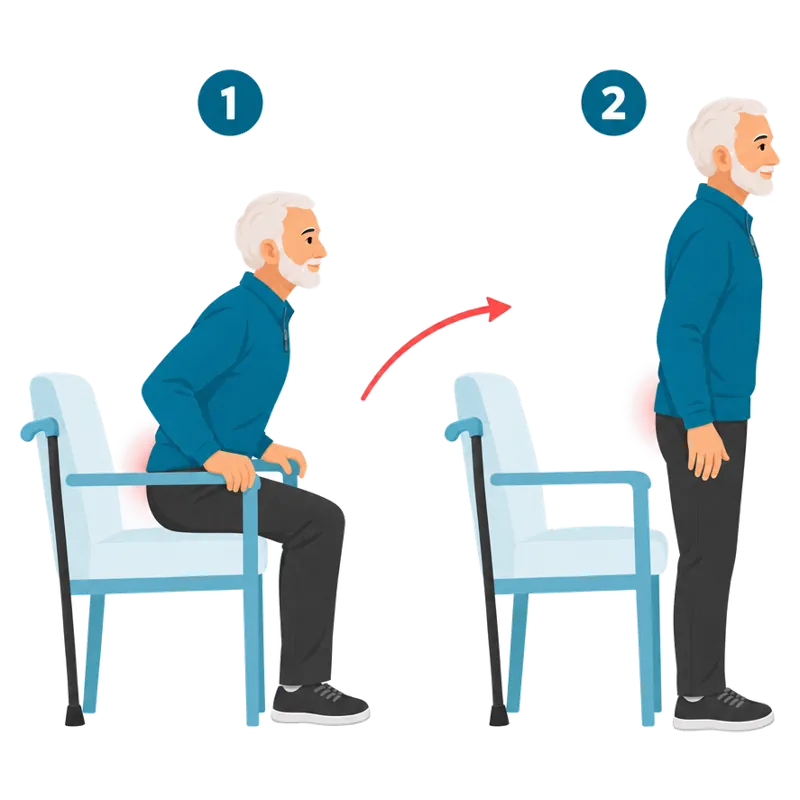
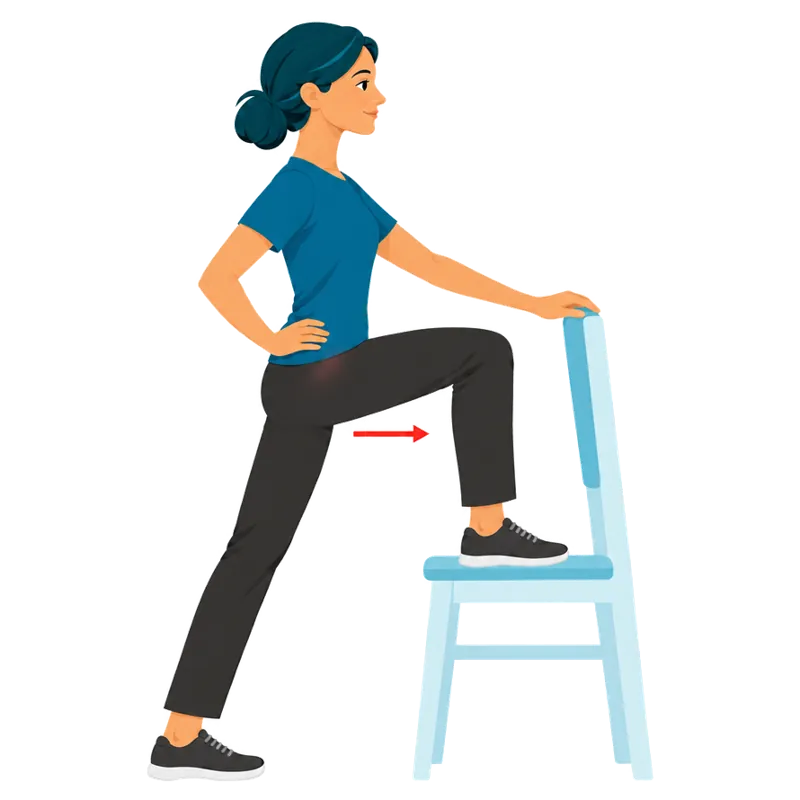
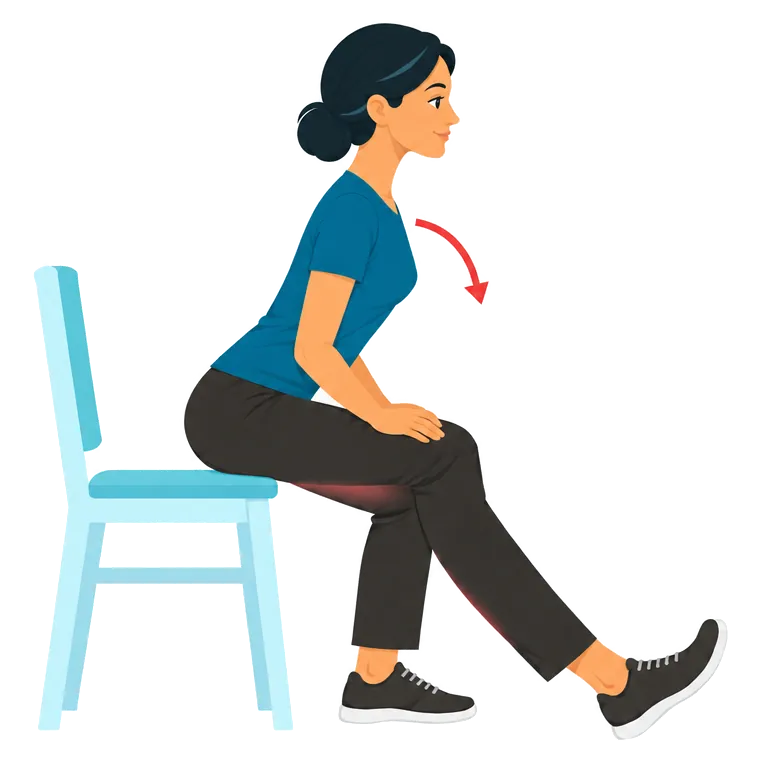
Examples only, to show what care may include. These are not instructions. Exercises should only be done as advised by a treating clinician.
When to get help sooner
Some signs should be checked quickly. Anyone noticing the following should contact their care team or a doctor right away. In an emergency, call 911.
- Being unable to put weight on the leg
- A leg that looks shorter or turned outward
- Severe groin pain, or numbness in the leg
Care under Care-First
Usually cared for through a customized treatment plan. After assessing the injury, the clinic builds a treatment plan suited to the injury. Care can begin any time within 2 years of the collision.
STEP 1
Assess
A clinician assesses the injury at the first visit.
STEP 2
Plan
The clinic builds a customized treatment plan.
STEP 3
2 years
Care can begin any time within 2 years of the collision.
Next steps
The first step is an assessment at a clinic of the claimant's choice, where a clinician looks at the injury and explains the options. Any qualified clinic can provide care under Care-First, and ACFN clinics across Alberta are one option. Before the first visit, it can help to write down what has changed since the collision, such as new symptoms or everyday activities that are now harder. This helps the clinician understand the injury and plan care. Questions about care are best answered by the treating clinician.
KEEP READING
More claimant resources
Understanding pain
Why pain can linger after an injury, even as the body heals.
Read this guide →
Mood and feelings
Stress and worry after a car crash are common. Support is available.
Read this guide →
Sleep after an injury
Why sleep can be harder after a collision, and why it matters for recovery.
Read this guide →This guide is general information about the injury and how care works. It is not medical advice and does not recommend any treatment or exercise. Treatment decisions are made with a health care provider.
